
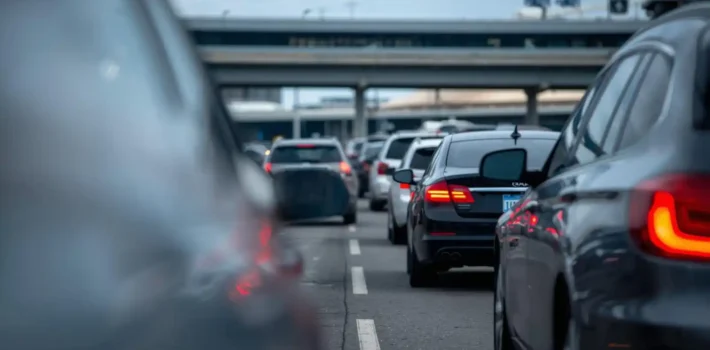
Why Delays Happen at LaGuardia Airport
LaGuardia Airport (LGA) sits inside one of the most congested urban traffic zones in the United States, which makes ground transportation delays relatively common. Unlike airports located outside major city centers, LaGuardia relies on a dense network of highways and local roads that handle both airport traffic and daily city commuting.
As a result, delays often occur not just because of airport activity, but due to surrounding road congestion. Vehicles entering the airport must navigate busy corridors such as the Grand Central Parkway and local access roads, where traffic can slow significantly during peak periods.
Key reasons for delays at LaGuardia
- Location within a high congestion urban area
- Heavy traffic on surrounding highways and parkways
- Limited access road capacity near terminals
- High volume of pickup and drop off activity
Understanding these factors helps travelers set realistic expectations when planning airport transportation.
NYC Traffic Congestion: The Bigger Picture
New York City consistently ranks among the most congested urban areas in the United States. Traffic congestion affects not only daily commuters but also airport access routes, including those leading to LaGuardia.
Drivers traveling through New York City can lose a substantial amount of time each year due to congestion. Traffic levels increase significantly during peak hours, particularly in the morning and evening when commuter demand is highest.
Congestion patterns also vary by season. Summer travel, holiday periods, and major city events can all contribute to increased traffic volume across key roadways.
Data from sources such as INRIX Traffic Scorecard highlights the consistent impact of congestion across major metropolitan areas like New York City.
Because LaGuardia sits within this broader traffic network, airport travel is directly influenced by these congestion trends.
Key Highways and Roads Leading to LaGuardia
Several major highways and roadways connect travelers to LaGuardia Airport. These routes form the primary access points for vehicles entering and exiting the airport area.
The Grand Central Parkway serves as one of the main corridors leading directly to LaGuardia. This roadway connects the airport with other parts of Queens and the broader New York City highway system.
The Brooklyn Queens Expressway (BQE) provides another major route, linking Brooklyn to Queens and connecting with highways leading toward the airport. This route often experiences heavy traffic due to its role as a major transportation artery.
The RFK Bridge (formerly Triborough Bridge) offers access from Manhattan and other boroughs, feeding traffic into roadways that lead toward LaGuardia.
In addition to these highways, local airport entrance roads guide vehicles into terminal areas. These roads are often busy because they handle both arriving and departing passenger traffic.
Because all of these routes operate within a dense urban environment, congestion is common throughout the day.
Why LaGuardia Airport Access Roads Create Delays
One of the key factors contributing to delays at LaGuardia Airport is the design and capacity of its access roads. Unlike larger airports with more expansive roadway systems, LaGuardia operates within a relatively compact area.
Limited road space means that a high volume of vehicles must share the same entry and exit points. During busy periods, this creates slower traffic flow as vehicles move toward terminal pickup and drop off areas.
Passenger volume also plays a role. As flights arrive and depart throughout the day, waves of passengers enter and exit the terminal, increasing the number of vehicles approaching the airport.
Continuous vehicle flow further adds to congestion. Taxis, rideshare vehicles, private cars, and airport shuttles all use the same road network, which can lead to bottlenecks near terminal entrances.
These conditions make it common for vehicles to experience delays even after reaching the airport perimeter.
Terminal Pickup Congestion at LGA
Pickup congestion at LaGuardia often occurs at the terminal curbside, where multiple vehicles attempt to access designated pickup zones. The airport organizes these areas to manage traffic, but high demand can still lead to slower movement.
Passengers exiting the terminal typically move toward designated ground transportation zones. At the same time, drivers approach the curbside to pick up travelers. When multiple flights arrive within a short time window, this creates a surge of activity in these areas.
Short waiting windows for vehicles also contribute to congestion. Drivers are often expected to keep moving and cannot remain in pickup zones for extended periods. This requires precise coordination between passengers and drivers.
Delays in passenger readiness can also affect timing. If passengers take longer to exit the terminal or collect baggage, drivers may need to circle the terminal area, adding to overall traffic flow.
These factors combine to create a dynamic environment where timing and coordination are critical.
How Traffic Conditions Change by Time of Day
Traffic patterns around LaGuardia Airport vary throughout the day, and understanding these patterns helps travelers plan more effectively.
Morning hours often bring increased congestion as commuters travel into New York City. Highways leading toward the airport may experience slower traffic during this period.
Afternoon traffic builds gradually as the day progresses, with congestion increasing on major roadways. By late afternoon and early evening, traffic typically reaches peak levels as commuters return home.
Evening peak periods often create the highest level of congestion around LaGuardia, particularly on routes such as the Grand Central Parkway and nearby access roads.
Late night hours generally offer reduced traffic, although construction or road work may occasionally affect travel time during these periods.
Because these patterns repeat daily, travelers can use them as a guide when planning airport transportation.
How Construction and Airport Redesign Affect Traffic
LaGuardia Airport’s redevelopment project introduced significant improvements to terminal infrastructure and roadway design. The updated layout aims to improve traffic flow and reduce congestion around terminal areas.
New terminal buildings and redesigned access roads have created a more organized system for handling vehicles. Separate lanes for arriving and departing passengers help distribute traffic more efficiently.
However, traffic patterns continue to evolve as drivers adjust to the new layout. Temporary road changes, ongoing adjustments, and construction related activity can still influence travel time in certain areas.
Travelers who are unfamiliar with the updated airport design may need additional time to navigate the new roadway system.
For a detailed explanation of how these changes impact pickups, travelers can refer to LGA Construction Updates and Pickup Impact, which explores the redevelopment in greater depth.
How Travelers Can Reduce Delay Risk
Although delays at LaGuardia are common, travelers can take several steps to reduce the impact of traffic and improve their overall experience.
Planning extra buffer time remains one of the most effective strategies. Allowing additional time for both travel and airport procedures helps account for unexpected delays.
Avoiding peak traffic hours can also improve travel time. When possible, scheduling airport trips outside of heavy congestion periods reduces exposure to delays.
Monitoring traffic conditions before departure provides valuable insight into current road conditions. Real time updates can help travelers adjust routes if necessary.
Scheduling transportation in advance is another helpful approach. Pre arranged transportation services allow for better coordination and timing.
Travelers often use options such as LaGuardia Airport Car Service to simplify airport transfers. Residents in coastal regions may also rely on Ocean County limousine service when planning travel to LaGuardia.
Why Travel Planning Matters More for LGA Than Other Airports
Compared to airports such as Newark, LaGuardia presents a more complex travel environment due to its location within New York City. The combination of urban traffic, limited access roads, and high passenger volume creates greater variability in travel time.
Unlike Newark, which primarily relies on highway access within New Jersey, LaGuardia requires drivers to navigate city traffic conditions that change throughout the day. This makes travel timing less predictable and increases the importance of careful planning.
Limited alternate routes further contribute to this challenge. When congestion builds on primary highways, alternative options may offer only minimal time savings.
Because of these factors, planning ahead becomes especially important for travelers heading to LaGuardia. Understanding traffic patterns, allowing extra time, and coordinating transportation effectively can make a significant difference in the overall travel experience.