
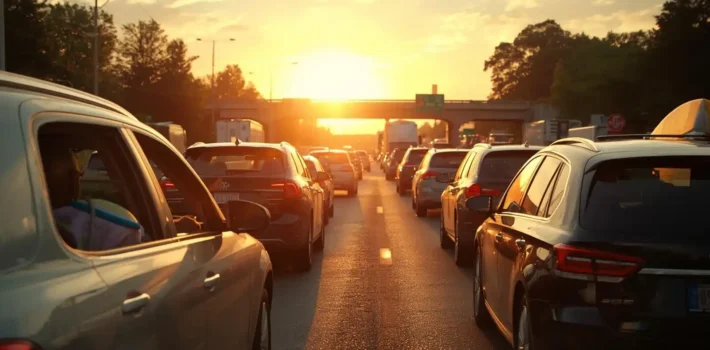
Quick Overview: How Summer Shore Traffic Affects Airport Travel
During the summer months, travel patterns across New Jersey change significantly due to increased tourism along the Jersey Shore. Towns throughout Monmouth and Ocean County attract large numbers of visitors, and this seasonal demand places heavy pressure on major highways that also serve as key routes to regional airports.
As a result, travel time to airports such as Newark Liberty International Airport (EWR) and John F. Kennedy International Airport (JFK) often increases, especially on weekends. Traffic congestion builds along routes leading away from shore towns, particularly during peak travel windows. Even trips that typically take under two hours can extend well beyond normal estimates during busy summer days.
Key summer travel impacts
- Jersey Shore tourism increases traffic across major highways
- Weekend congestion significantly affects northbound routes
- Travel time to airports can increase by 20 to 60 minutes or more
- Planning additional transportation buffer becomes essential
Understanding these patterns allows travelers to adjust departure timing and reduce the risk of delays when heading to the airport.
When Summer Shore Traffic Is Most Intense
Summer traffic patterns in New Jersey follow predictable trends driven by beach tourism and weekend travel behavior. Travelers who understand these patterns can better plan their airport transportation.
One of the busiest periods occurs on Friday afternoons, when large numbers of visitors travel toward shore towns. While this primarily affects southbound traffic, it can still impact surrounding highways and create congestion that carries into evening hours.
Saturday daytime travel also brings steady traffic as visitors move between shore towns and surrounding areas. Although not always as congested as Friday afternoons, traffic remains elevated throughout the day.
The most significant impact on airport travel occurs on Sunday evenings, when visitors return from the shore. During this time, northbound traffic increases dramatically along major highways, directly affecting routes used by travelers heading toward Newark and New York City airports.
Holiday weekends such as Memorial Day, Fourth of July, and Labor Day amplify these patterns. During these periods, traffic volumes increase across all major routes, and delays become more widespread throughout the region.
Because many airport routes rely on the same highways used by shore traffic, these seasonal patterns directly affect travel times.
Major Highways Affected by Shore Traffic
Several key highways carry the majority of summer traffic between shore towns and northern New Jersey. These routes also serve as primary corridors for airport travel, which makes them especially important during peak summer periods.
The Garden State Parkway is the most heavily affected highway. It runs directly through Monmouth and Ocean County and connects shore communities with northern New Jersey. During summer weekends, this highway often experiences heavy congestion, particularly in northbound lanes on Sunday afternoons and evenings.
Other routes such as Route 18 and Route 9 also experience increased traffic as local vehicles move between towns and connect to larger highways. These roads often feed into the Garden State Parkway, adding to overall congestion levels.
The New Jersey Turnpike can also experience increased traffic during summer months, especially as drivers transition from the Parkway toward northern destinations or New York City.
More information about this major corridor can be found through the Garden State Parkway, which serves as the backbone of travel through the Jersey Shore region.
Because these highways form the foundation of airport routes, congestion in any of these areas can affect travel time significantly.
Travel Time Impact for Newark Airport During Summer
Travel to Newark Liberty International Airport becomes less predictable during the summer months due to increased northbound traffic on the Garden State Parkway. Since many travelers from Monmouth and Ocean County rely on this route, congestion along the Parkway directly affects travel time to EWR.
During normal weekday conditions, the drive to Newark Airport from central New Jersey may take between 60 and 90 minutes. However, on summer weekends, especially Sunday afternoons, travel time can extend to 90 to 120 minutes or more depending on traffic conditions.
Toll plaza delays can also increase during busy periods, as higher traffic volumes slow vehicle movement through these areas. In addition, merging traffic from feeder roads such as Route 18 and Route 9 can create additional slowdowns.
Because Newark Airport sits within New Jersey, it avoids the additional complexity of entering New York City. However, summer congestion along the Parkway alone is often enough to significantly extend travel time.
Travelers planning trips to Newark during peak summer weekends should always include extra buffer time to account for these delays.
Travel Time Impact for JFK Airport During Summer
Traveling to JFK Airport during summer months introduces an additional layer of complexity beyond shore traffic alone. In addition to congestion along New Jersey highways, drivers must also navigate New York City traffic conditions.
The journey to JFK typically includes routes such as the Verrazzano Bridge, Belt Parkway, or other major New York City corridors. These roads often experience heavy traffic even under normal conditions. During summer weekends, congestion from the Jersey Shore combines with urban traffic, creating longer and less predictable travel times.
For travelers coming from Monmouth or Ocean County, the drive to JFK may normally take around two hours under steady conditions. During peak summer periods, however, this travel time can extend to 2.5 to 3 hours or more, particularly when congestion builds along both the Garden State Parkway and New York City highways.
The combination of longer distance and multiple traffic layers makes JFK travel more sensitive to timing during the summer. Delays can occur at several points along the route, from New Jersey highways to city bridges and parkways.
Because of these factors, planning for JFK travel during summer months requires a more conservative approach to timing.
Newark vs JFK: Which Airport Is Easier During Summer?
Choosing between Newark and JFK during summer months depends on several factors, including distance, route complexity, and traffic variability.
For travelers in Monmouth and Ocean County, Newark Airport generally offers a shorter and more direct route. The journey primarily relies on highways within New Jersey, which reduces the number of variables affecting travel time.
JFK Airport, on the other hand, requires a longer drive and involves navigating New York City traffic in addition to New Jersey highway congestion. This added complexity often increases travel time variability, particularly during peak summer weekends.
| Factor | Newark Airport (EWR) | JFK Airport |
| Distance from NJ Shore | Shorter | Longer |
| Route Complexity | Moderate | High |
| Traffic Layers | NJ highways only | NJ + NYC traffic |
| Summer Variability | Moderate to high | High |
While Newark may be easier for many travelers due to its location, JFK still remains a preferred choice for certain flights, especially international routes. The decision often depends on flight availability, schedule, and individual travel preferences.
Travel Planning Tips for Summer Airport Trips
Planning ahead becomes especially important when traveling to the airport during summer months. Small adjustments in timing and preparation can significantly reduce the impact of traffic delays.
Travelers should consider avoiding peak shore traffic windows whenever possible. Leaving earlier in the day or outside of Sunday evening return periods can help reduce exposure to heavy congestion.
Monitoring traffic conditions before departure is another helpful step. Real time updates can provide insight into current highway conditions and allow travelers to adjust their route if necessary.
Adding extra buffer time is essential during summer weekends. Even a 30 to 45 minute buffer can make a significant difference when unexpected delays occur.
Scheduling transportation earlier than usual during holiday weekends also helps account for increased traffic volume and longer travel times.
Why Early Transportation Planning Matters During Summer
Summer travel introduces a higher level of unpredictability compared to other times of the year. Increased tourism, heavier highway traffic, and airport congestion all contribute to longer travel times and greater variability.
Because of this, early transportation planning plays a key role in ensuring a smooth airport journey. Travelers who plan their departure time carefully and account for traffic patterns are more likely to reach the airport without stress.
Airport congestion during vacation season can also affect pickup and drop off areas, making timing even more important. Arriving too close to departure time increases the risk of delays caused by traffic both on highways and within airport access roads.
Many travelers choose to arrange transportation in advance through services such as Airport Limousine Service, which helps manage timing and route planning more effectively.
Passengers traveling from shore communities often coordinate airport transportation through providers offering Ocean County limousine service, especially during peak summer weekends.
For additional guidance on planning travel from the Jersey Shore, travelers can also review Travel Time from Toms River to Newark Airport by Time of Day, which explains route timing and traffic patterns in more detail.
By understanding summer traffic patterns and planning ahead, travelers can navigate airport travel more confidently even during the busiest travel season.