
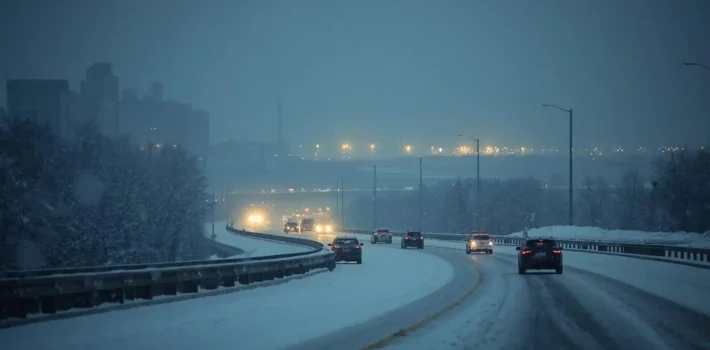
How Snow Impacts Travel to Newark Airport
Winter weather can significantly affect travel to Newark Liberty International Airport (EWR), especially during active snowfall or storm conditions. Snow reduces highway speeds, increases traffic congestion, and may lead to delays both on the road and at the airport itself.
Even light snowfall can slow traffic across major routes such as the Garden State Parkway and New Jersey Turnpike. During heavier storms, road conditions may deteriorate further, causing longer travel times and occasional disruptions due to accidents or lane closures. At the same time, airport operations may also be impacted, with delays caused by aircraft de icing procedures and increased ground activity.
For travelers heading to Newark Airport during winter months, the most important adjustment is adding extra buffer time. A trip that normally takes 60 to 90 minutes may extend significantly during snow conditions, making early departure planning essential.
Average Winter Snowfall in Newark and North Jersey
Newark and the surrounding North Jersey region experience regular snowfall during the winter season, which typically spans from December through March. On average, the Newark area receives approximately 25 to 30 inches of snow annually, although totals vary from year to year depending on storm patterns.
Snowfall does not occur consistently throughout the winter, but several storm events usually affect the region each season. Some winters may see frequent light snowfalls, while others may include a few major storms that produce heavier accumulation in a short period.
The highest likelihood of snow typically occurs between January and February, when temperatures are coldest and winter storm systems are most active across the northeastern United States. During these months, travelers are more likely to encounter snow covered roads, reduced visibility, and slower traffic conditions.
Travelers can monitor real time winter weather updates and snowfall forecasts through the National Weather Service, which provides detailed regional forecasts for the Newark area.
Major Highways Used to Reach Newark Airport
Travelers from Monmouth County, Ocean County, and surrounding areas typically rely on several major highways when heading to Newark Airport. These routes form the primary transportation network connecting central New Jersey with the airport.
The Garden State Parkway serves as a key north south corridor, allowing drivers to move from coastal areas toward northern New Jersey. Many travelers use this route as the first stage of their journey before connecting to other highways leading directly to the airport.
The New Jersey Turnpike is another major route that carries a high volume of traffic toward Newark. This highway provides direct access to the airport area and is commonly used for longer distance travel within the state.
Drivers approaching the airport may also use Route 78, which connects western and central New Jersey to Newark Airport. This route becomes especially important for travelers coming from inland areas.
Finally, airport entrance roads guide vehicles from these highways into the terminal areas. These access roads often experience slower traffic during busy periods and can become more congested during winter weather.
Snow conditions affect all of these routes by reducing traction, lowering speed limits, and increasing the likelihood of traffic buildup.
How Snow Affects Travel Time to Newark Airport
Snowfall changes driving conditions in several ways that directly impact travel time. Even a small amount of snow can create noticeable delays, especially on heavily traveled highways.
One of the most immediate effects is reduced driving speed. Snow covered roads and icy conditions force vehicles to travel more cautiously, which slows overall traffic flow. Drivers often increase following distance and reduce speed to maintain safety.
Traffic congestion also increases during snowfall. As vehicles slow down, traffic density builds, particularly on highways such as the Garden State Parkway and New Jersey Turnpike. This congestion can extend travel times well beyond normal expectations.
Accidents become more common during winter weather, which can temporarily block lanes or cause traffic diversions. Even minor incidents can create significant delays when they occur on busy highways.
In addition, airport entrance roads may experience slower movement as vehicles approach terminal areas. Increased caution, combined with higher traffic volume during peak travel times, can lead to longer wait times near the airport itself.
Because of these factors, travelers should plan for longer travel times whenever snow is expected.
How Winter Weather Affects Airport Operations
Winter weather not only impacts road travel but also affects airport operations at Newark Liberty International Airport. During snowfall events, airlines and airport staff must take additional steps to ensure safe aircraft operations.
One of the most common procedures is aircraft de icing, which involves removing ice and snow from aircraft surfaces before departure. This process takes additional time and can create delays, particularly during periods of heavy snowfall when many aircraft require treatment at the same time.
Flight schedules may also be affected. Airlines sometimes delay departures or adjust flight timing to account for weather conditions. In more severe storms, flights may be rescheduled or canceled depending on safety considerations.
Gate availability can become limited when delays cause aircraft to remain at gates longer than scheduled. This can create a ripple effect across multiple flights, increasing congestion within the airport.
Baggage handling may also slow during winter conditions, especially when ground crews must operate in snowy or icy environments.
Understanding these operational factors helps travelers set realistic expectations when flying during winter months.
When Travelers Should Leave Earlier During Snowstorms
Planning departure time becomes especially important when snow is in the forecast. Travelers should adjust their schedule based on both road conditions and airport operations.
For domestic flights, travelers who would normally leave home two and a half to three hours before departure may need to extend that window. During snow conditions, leaving three to four hours before the flight provides additional buffer for slower travel and possible delays.
For international flights, which already require earlier airport arrival, travelers often plan for four to five hours before departure when winter storms are expected. This additional time helps account for both extended travel time and potential airport delays.
Early morning flights during snowfall require special attention. While traffic volume may be lower, road conditions can be more challenging due to overnight accumulation of snow or ice.
By adjusting departure times proactively, travelers reduce the risk of arriving late due to unpredictable winter conditions.
How Professional Drivers Plan for Winter Airport Trips
Drivers who regularly transport passengers to Newark Airport take several steps to prepare for winter travel conditions. One of the most important practices is monitoring weather forecasts in advance of the trip. This allows drivers to anticipate potential delays and adjust departure times accordingly. Route planning also plays a role. Drivers may choose highways that are more frequently maintained or cleared during snowstorms, helping maintain safer travel conditions. In some cases, alternate routes may be used to avoid congestion or known trouble areas.
Another important factor is allowing additional travel time. Professional drivers often build extra buffer into the schedule to ensure passengers arrive at the airport on time despite slower road conditions. These planning strategies help create a more reliable travel experience even when winter weather introduces uncertainty.
Travelers often rely on services such as Newark airport car service for this level of coordinated planning during winter travel. Passengers traveling from central New Jersey may also arrange transportation through providers offering Monmouth County limousine service, particularly when longer distance travel is involved.
Winter Travel Tips for Newark Airport Passengers
Travelers heading to Newark Airport during winter months can improve their experience by following a few practical planning steps.
- Monitor weather forecasts before the day of travel
- Check airline updates for possible delays or schedule changes
- Add extra buffer time for transportation
- Keep communication open with your driver or transportation provider
- Prepare for slower movement both on highways and within the airport
Travelers planning routes from central New Jersey can also review timing considerations in Travel Time from Freehold to Newark Airport by Time of Day, which explains typical driving conditions and route planning factors.
By combining weather awareness, transportation planning, and realistic timing expectations, travelers can navigate winter airport trips more confidently and reduce the risk of unexpected delays.