
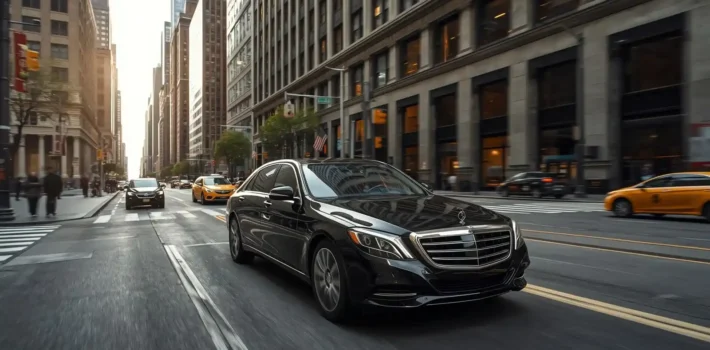
Manhattan traffic does not simply move slower than other cities. It operates under a different logic. Street density, delivery congestion, pedestrian saturation, rideshare volume, and now congestion pricing enforcement all shape how vehicles move through the borough. Professional navigation in Manhattan requires more than reacting to traffic signals. It requires structured planning, local awareness, and the ability to adjust in real time without disrupting client schedules.
Why Manhattan traffic is different from any other city
Manhattan’s traffic density exceeds most U.S. urban centers due to its grid layout and layered transportation systems. Delivery vehicles double-park along avenues, pedestrian flow spills into intersections, and rideshare vehicles cluster around high-demand corridors. Recent congestion pricing initiatives below 60th Street have shifted traffic patterns, redistributing flow toward bridge and tunnel entries at specific hours. The combination of vertical density, constant construction, and strict enforcement zones creates a traffic environment that demands anticipation rather than simple navigation.
Understanding Manhattan traffic patterns by time of day
Traffic timing in Manhattan follows predictable but compressed waves. Morning rush typically intensifies between 7:00 AM and 10:00 AM as commuters enter through the Lincoln Tunnel, Holland Tunnel, and bridges. Midday congestion often peaks around commercial corridors such as Fifth Avenue and Park Avenue due to delivery schedules and service vehicles. Evening commuter waves between 4:30 PM and 7:30 PM create bottlenecks on outbound routes toward New Jersey and Queens. Late-night traffic appears lighter but remains affected by construction work, event dispersal, and increased rideshare demand.
How bridge and tunnel traffic affects Manhattan travel
Regional access points heavily influence Manhattan timing. The Lincoln Tunnel frequently experiences inbound congestion during weekday mornings and outbound congestion during late afternoons, often adding 15 to 30 minutes during peak flow. The Holland Tunnel follows similar patterns but is more sensitive to downtown event traffic and construction near Canal Street. The George Washington Bridge impacts upper Manhattan entries, particularly when cross-Bronx congestion spills over. Professional chauffeurs build cross-state travel buffers when moving between Manhattan and New Jersey to account for these consistent variables.
How professional chauffeurs plan Manhattan routes in advance
Professional chauffeurs rarely rely on single-route assumptions. Route pre-planning begins before departure, analyzing time of day, event schedules, and recent construction advisories. Real-time traffic monitoring supports adjustments, but alternate street grids remain prepared, including parallel avenues or crosstown options when primary corridors stall. Construction awareness matters, especially near ongoing projects in Midtown and Lower Manhattan that shift lane access weekly. This layered approach reduces reaction time and protects arrival commitments.
Why local knowledge beats GPS-only navigation
Navigation apps provide data, but Manhattan frequently requires judgment. Temporary road closures due to film shoots, emergency response activity, or last-minute street permits may not update instantly. Police traffic control during parades or demonstrations reroutes vehicles unpredictably. Local instinct allows chauffeurs to bypass congestion before it appears on digital maps, especially in areas like Times Square or around Madison Square Garden where traffic can lock within minutes.
Curbside pickup and drop-off challenges in Manhattan
Curbside access in Manhattan presents constant challenges. No-standing and no-stopping zones change block by block. Hotel front entrances along Central Park South or Midtown often restrict waiting time to minutes. Office buildings enforce security protocols that limit driveway access. Residential buildings may lack dedicated loading zones entirely. Professional chauffeurs coordinate precise arrival timing and staging strategies to minimize passenger wait while avoiding enforcement penalties.
Airport transfers between Manhattan and major airports
Airport transfers require strategic timing. Travel from Midtown to JFK ranges from 15 to 18 miles, with average travel time fluctuating between 45 and 90 minutes depending on Belt Parkway flow. LaGuardia sits closer at approximately 8 to 10 miles, yet congestion along the Grand Central Parkway can extend travel time beyond one hour during peak periods. Newark requires cross-Hudson travel via the Lincoln Tunnel and New Jersey Turnpike, typically 16 to 20 miles from Midtown, with peak travel times exceeding 75 minutes. Early morning departures before 6:00 AM often reduce congestion significantly, while peak afternoon windows demand larger buffers.
Navigating Midtown vs Downtown Manhattan differences
Midtown carries the highest density of commercial activity, hotels, and tourist flow, especially between 42nd and 59th Streets. Downtown Manhattan, including the Financial District, experiences concentrated weekday congestion during business hours but lighter traffic on weekends. Event-heavy areas near Hudson Yards or the Javits Center create periodic gridlock during conventions. Understanding these neighborhood differences allows chauffeurs to adjust timing and routing strategies accordingly.
Handling corporate meetings and tight Manhattan schedules
Corporate itineraries in Manhattan often involve back-to-back meetings within compressed geographic zones. Multi-stop itineraries across Midtown offices or between Downtown financial institutions require structured timing. Client-facing arrivals demand precise drop-off positioning and punctuality discipline. Time recovery tactics, such as adjusting routes mid-trip or selecting alternate bridges, help maintain schedule integrity throughout demanding days.
Managing traffic during major NYC events
Major NYC events alter normal traffic patterns dramatically. Parades along Fifth Avenue close multiple cross streets. Sports events at Madison Square Garden generate concentrated congestion before and after games. Fashion Week shifts Midtown flow with venue clusters and temporary closures. Holiday season congestion intensifies along retail corridors such as Rockefeller Center. Professional chauffeurs monitor event calendars to anticipate these disruptions rather than reacting once congestion builds.
Why rideshare drivers struggle more in Manhattan
Rideshare drivers face increased difficulty navigating enforcement zones and temporary restrictions without consistent local familiarity. Curbside enforcement leads to cancellations when drivers cannot wait legally. Driver unfamiliarity with grid alternatives causes hesitation at critical intersections. App-based routing may not reflect sudden closures, increasing missed turns and delays.
How professional chauffeurs reduce stress in Manhattan travel
Professional chauffeurs maintain calm driving behavior even in dense environments. Predictable timing and steady communication reduce passenger anxiety. Clear updates regarding delays or alternate routes create transparency. Efficient execution ensures that despite Manhattan’s complexity, travel remains structured and controlled rather than chaotic.
Choosing a Manhattan car service with real local experience
Selecting the right provider requires evaluating genuine local knowledge and operational discipline. Ask about experience navigating congestion pricing zones and managing Midtown curbside restrictions. Signs of experience include confident route explanations and structured airport timing strategies. Services offering structured NYC Car Service and dedicated Manhattan Car Service operations typically demonstrate stronger borough-level familiarity. For additional context on high-density pickup strategy, see Best Pickup and Drop Off Practices in Busy City Areas.