
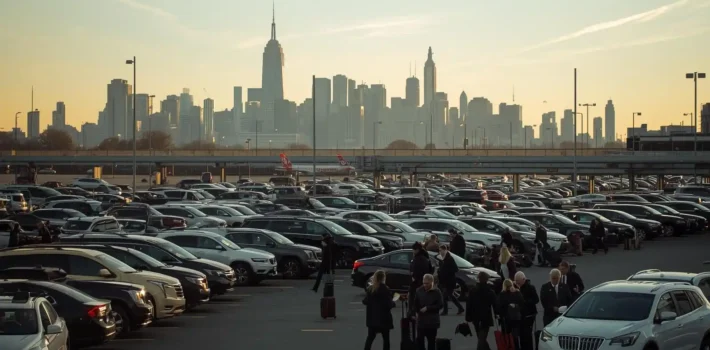
Is Driving to JFK Airport Worth It?
Driving to John F. Kennedy International Airport (JFK) from New Jersey can appear convenient at first, but the total cost often becomes higher than expected once all factors are included. Unlike Newark, traveling to JFK involves longer distances, higher toll exposure, and navigating New York City traffic.
Parking costs at JFK also tend to accumulate quickly, especially for multi day trips. When combined with tolls, fuel, and time investment, the overall expense can rival or exceed other transportation options.
For short trips, driving may still be practical. However, for longer travel durations or peak traffic periods, the total cost and effort required often change the equation significantly.
Why JFK Travel Costs Are Different from Newark
Traveling to JFK from New Jersey differs from Newark Airport in several important ways, and these differences directly impact overall cost and travel experience.
The most obvious factor is distance. JFK sits deeper within New York City, requiring a longer drive compared to Newark. This added distance increases fuel consumption and travel time.
Another key difference is toll infrastructure. Routes to JFK typically include major toll crossings such as bridges or tunnels, which add to the total cost. These tolls are generally higher than those encountered on routes within New Jersey.
Traffic complexity also plays a role. Driving into New York City involves navigating multiple highways, bridges, and urban roadways, all of which can experience congestion. This increases both travel time and unpredictability.
These combined factors make JFK travel more expensive and complex compared to Newark for many New Jersey travelers.
Routes from NJ to JFK Airport
Travelers heading to JFK from New Jersey typically rely on a few major route options. While navigation apps often suggest the fastest route based on current traffic, most journeys follow similar highway corridors.
One common route begins on the Garden State Parkway, connecting to the New Jersey Turnpike before heading toward Staten Island. From there, drivers cross the Verrazzano Bridge into Brooklyn and continue along the Belt Parkway, which leads directly toward JFK Airport.
Another frequently used route involves entering the New Jersey Turnpike earlier and following it toward Staten Island before crossing the Verrazzano Bridge. This route may be preferred depending on starting location and traffic conditions.
Both options eventually converge into the same New York City road network, where traffic conditions can vary significantly. Route selection often depends on real time traffic, but each option involves tolls and urban driving conditions.
Toll Breakdown for JFK Travel from NJ
Traveling to JFK involves several toll points, and these costs vary depending on the route taken and distance traveled.
| Route Segment | Typical Toll Type | Notes |
| NJ Turnpike | Distance based toll | Varies by entry and exit point |
| Verrazzano Bridge | One way toll (eastbound) | Charged when entering Brooklyn |
| NYC Roadways | Included in route | No additional toll after bridge |
These tolls can add up quickly, especially when considering both the outbound and return journey.
Toll summary
- NJ Turnpike toll depends on travel distance
- Verrazzano Bridge toll is one of the highest in the region
- Total toll cost varies depending on route selection
- Return trip may include additional toll exposure depending on routing
For official toll details and updates, travelers can refer to information provided by the Metropolitan Transportation Authority.
JFK Airport Parking Cost Breakdown
Parking at JFK Airport offers several options, each with different cost levels and convenience factors. Travelers typically choose between short term, long term, and economy parking depending on trip duration.
Short term parking is located closest to the terminals and is intended for brief stays. This option carries the highest daily rates and is rarely used for extended trips.
Long term parking provides a more practical option for multi day travel but still involves moderate daily costs. Over several days, these charges can add up significantly.
Economy parking offers the lowest daily rate but requires shuttle transportation to and from the terminal. While this reduces cost, it increases total travel time due to shuttle wait and transit.
For trips lasting several days, parking often becomes the largest single expense when driving to JFK.
Fuel and Distance Considerations
Driving to JFK requires a longer journey compared to Newark, which increases fuel consumption. The total round trip distance from central New Jersey can exceed 120 to 150 miles depending on the starting location.
Fuel cost depends on vehicle efficiency and current fuel prices, but traffic conditions also play a role. Stop and go traffic on highways and city roads can increase fuel usage compared to steady highway driving.
Because routes to JFK involve both highway and urban traffic, fuel consumption may be less predictable than shorter airport trips.
Although fuel costs alone may not seem significant, they contribute to the overall expense when combined with tolls and parking.
Total Cost Example: Driving to JFK
A practical example helps illustrate how costs accumulate when driving to JFK Airport.
Consider a five day trip from central New Jersey:
- Parking costs for five days can reach a moderate to high range depending on the selected lot
- Toll expenses include both outbound and return travel across major routes
- Fuel costs cover the full round trip distance
When combined, these costs create a total that can approach or exceed the cost of pre arranged airport transportation. While exact figures vary, the difference is often smaller than many travelers expect.
This example highlights the importance of evaluating the full cost rather than focusing on a single expense category.
Private Airport Car Service Cost Comparison
Private airport transportation offers a different cost structure compared to driving. Instead of variable expenses such as parking, tolls, and fuel, travelers typically pay a flat rate based on distance and service type.
This pricing model provides greater predictability. Travelers know the cost in advance and do not need to manage additional expenses during the trip.
There are also no parking fees or toll payments handled directly by the traveler. Transportation providers manage route selection and associated costs as part of the service.
Many travelers heading to JFK choose options such as JFK Airport Car Service for this level of cost clarity and convenience. In areas such as central New Jersey, passengers often coordinate through providers offering Monmouth County limousine service to simplify airport travel.
Time and Convenience Factors
Beyond financial cost, time and convenience play a major role in the decision between driving and using airport transportation.
Driving to JFK involves navigating multiple traffic layers, including highways, bridges, and city roads. Congestion on routes such as the Belt Parkway or near bridge crossings can significantly extend travel time.
Parking introduces additional time requirements. Travelers must locate a parking space, unload luggage, and use shuttle services if parked in economy lots. These steps add time before reaching the terminal.
The return journey is another consideration. After a long flight, especially international travel, driving back through New York City traffic can be physically and mentally demanding.
These factors often influence travelers to consider alternatives that reduce effort and uncertainty.
When Driving to JFK Makes Sense
There are situations where driving to JFK remains a practical option. Short trips lasting one or two days typically result in lower parking costs, making driving more economical.
Traveling during off peak hours can also reduce traffic challenges. Early morning or late night departures often involve lighter traffic conditions, improving travel time reliability.
Drivers who are familiar with New York City routes and comfortable navigating urban traffic may also prefer driving for the flexibility it provides.
In these cases, the balance between cost and convenience may favor driving.
When Airport Transportation Is More Practical
For longer trips, the cost of parking increases significantly, making alternative transportation options more appealing. Multi day travel often shifts the cost balance away from driving.
Peak traffic periods also make airport transportation more practical. Navigating New York City during busy hours adds complexity and unpredictability to the journey.
International flights introduce additional considerations. Longer check in times and earlier arrival requirements increase the importance of reliable transportation.
Travelers unfamiliar with New York City roads may also find airport transportation more convenient, as it removes the need to navigate complex routes and traffic conditions.
Final Comparison: Cost vs Practicality
Driving to JFK Airport may appear cost effective at first, but a full evaluation often reveals additional expenses and logistical challenges. Parking fees, toll costs, fuel consumption, and time investment all contribute to the overall cost.
While driving offers flexibility, it also introduces uncertainty and additional effort. In contrast, pre arranged transportation provides predictable pricing and eliminates many of the logistical challenges associated with airport travel.
Ultimately, the decision depends on individual priorities. Some travelers prioritize cost control and independence, while others value convenience and reliability.
For route planning insights, travelers can also review Monmouth County to JFK Airport Route Toll and Traffic Planning Guide, which explains travel timing and route considerations in detail.
By weighing both financial and practical factors, travelers can choose the option that best fits their needs when traveling to JFK Airport.