
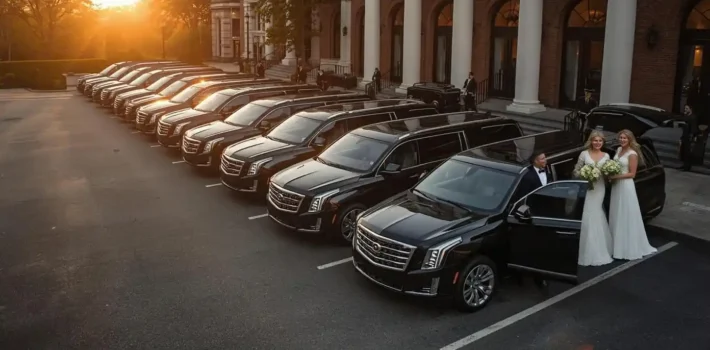
Large events introduce complexity that individual travel never exposes. Whether coordinating wedding guests across Monmouth County, transporting corporate attendees to a Newark conference center, or moving groups toward MetLife Stadium, the challenge lies in synchronization rather than distance. Group transportation requires structure, timing discipline, and layered communication systems. Without coordination, even short routes become chaotic when multiplied across multiple vehicles and dozens of passengers.
Why group transportation fails without proper coordination
Group transportation commonly fails because small timing errors compound across multiple passengers and vehicles. Staggered arrivals delay ceremony starts or keynote speeches. Parking limitations at shore venues or urban event halls create bottlenecks that slow unloading. Confusion at pickup points, especially in hotels with multiple entrances, results in missed departures. When several vehicles operate without centralized oversight, minor delays cascade into schedule disruptions that affect the entire event flow.
Defining group size and vehicle needs early
Accurate passenger count forms the foundation of successful planning. Underestimating headcount often forces last-minute vehicle additions, while overestimating creates unnecessary cost and inefficiency. Capacity planning must consider luggage, presentation equipment, or wedding décor that occupies additional space. Accessibility requirements for elderly guests or mobility accommodations must be identified early to ensure proper vehicle selection. Clear numbers allow scheduling precision instead of reactive adjustments.
Coordinating multiple vehicles for the same event
Multi-vehicle coordination requires defined roles. A lead vehicle sets arrival timing, particularly for weddings or executive groups. Staggered departures prevent driveway congestion at tight venue entrances. Communication between drivers ensures spacing consistency and route alignment, especially when navigating highways like the Garden State Parkway or Route 18 toward shore venues. Central dispatch oversight provides real-time coordination so vehicles operate as a synchronized unit rather than independent drivers.
Timeline mapping for large event days
Timeline mapping creates structure across phases of the day. Pre-event arrivals must account for traffic buffers, particularly during peak Saturday wedding season in coastal towns. Ceremony or main event start times require vehicles to arrive 20 to 30 minutes early to absorb delays. Intermission transfers during conferences demand precise staging. Post-event exit flow planning prevents simultaneous vehicle crowding and ensures smooth dispersal.
Managing hotel-to-venue transportation
Hotel-to-venue transport remains one of the most common large-event scenarios. Wedding guest shuttles often move between shore hotels and waterfront venues where parking remains limited. Corporate conferences in Newark or Jersey City require timed departures to avoid morning congestion along I-78 or the NJ Turnpike. Stadium transfers to MetLife or Prudential Center must account for entry restrictions and heavy pre-event traffic. Clear meeting instructions within hotel lobbies reduce confusion and improve departure efficiency.
Venue-specific logistics planning
Every venue carries its own logistical rules. Some estates in Monmouth County restrict driveway access to a single entry point, requiring staggered arrivals. Urban venues may enforce designated drop-off zones with police traffic control. Security checkpoints at corporate events require credential verification before entry. Coordinating directly with venue staff ensures vehicles position correctly and avoid unnecessary circulation.
Handling large exits after events end
Post-event dispersal presents the highest stress window. Crowd surges spill into parking lots and surrounding roads simultaneously. Designated pickup points prevent vehicles from idling in restricted areas. Staggered loading allows groups to board systematically instead of rushing. Traffic dispersal strategy may include delaying departure by 10 to 15 minutes to allow primary congestion to clear, particularly after stadium events where outbound traffic can stall for extended periods.
Communication strategy for group coordination
Clear communication anchors group movement. Assigning a central contact person prevents conflicting instructions. Real-time updates allow passengers to adjust when traffic shifts. Backup meeting points provide contingency options if primary entrances become inaccessible. Visible signage or simple printed instructions eliminate confusion in large hotel lobbies or venue courtyards.
Safety considerations for large group transport
Passenger accountability ensures no one gets left behind during staggered departures. Seat belt compliance remains mandatory, especially for longer highway segments. Alcohol-related safety becomes critical during weddings or celebratory events, requiring responsible return planning. Late-night travel precautions include fatigue management and route awareness to avoid poorly lit or congested corridors.
Common mistakes in group transportation planning
Underestimating traffic during peak seasons remains a primary error, especially along coastal routes during summer weekends. Booking too few vehicles forces overcrowding or delayed second trips. Ignoring return timing leads to extended waits after events conclude. Last-minute itinerary changes without notifying dispatch create confusion across the fleet. Structured planning prevents these preventable missteps.
Why professional coordination reduces event stress
Professional coordination introduces dispatcher oversight, experienced chauffeurs, and contingency planning. Venue familiarity eliminates guesswork around access rules. Multi-vehicle scheduling tools synchronize arrival and departure times. Instead of managing logistics personally, hosts and planners focus on the event itself while transportation operates predictably in the background.
Choosing the right transportation partner for large events
Selecting the right partner requires evaluating prior experience with similar-scale events, fleet flexibility, and communication discipline. Ask how the provider handles multi-vehicle coordination and post-event dispersal. For wedding-specific coordination frameworks, readers can review Wedding Transportation, which outlines structured approaches to ceremony and reception logistics. Additional planning depth appears in How to Plan Transportation for Weddings in New Jersey, which explains timeline mapping and seasonal traffic considerations in greater detail. Providers who demonstrate operational structure and regional familiarity deliver reliability that scales with group size.