
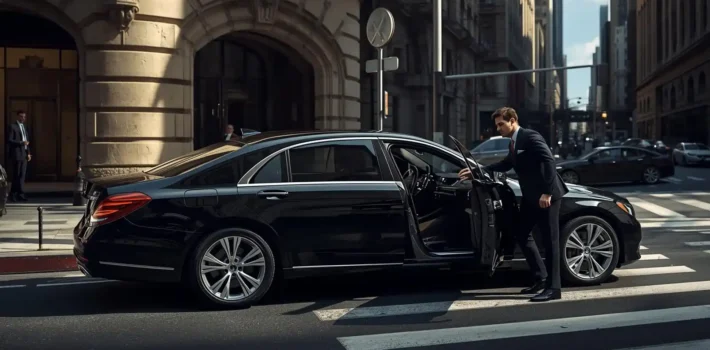
Urban pickups and drop-offs appear simple on maps but rarely function smoothly without planning. In dense environments like Midtown Manhattan, Jersey City waterfront districts, or downtown Newark, curb space operates under strict enforcement and heavy traffic flow. Double parking creates immediate congestion, no-standing zones shift block by block, and pedestrian density limits safe loading opportunities. Professional pickup strategy depends on timing discipline, curbside awareness, and structured communication rather than reactive navigation.
Why urban pickups and drop-offs fail without planning
Urban pickups fail because drivers assume curb availability that does not exist during peak hours. Double parking risks tickets and obstructs traffic, particularly along corridors such as Fifth Avenue or Broad Street in Newark. No-standing zones enforced by traffic officers restrict waiting time to seconds rather than minutes. Pedestrian congestion near office towers and hotels creates unpredictable crossing patterns. Without structured arrival timing, vehicles circulate unnecessarily, increasing delay and stress.
Understanding city curbside rules and restrictions
City curbside regulations vary block by block. No-standing and no-stopping zones often dominate commercial corridors. Loading zones may apply only to commercial deliveries and exclude passenger vehicles. Hotels along Central Park South or Jersey City waterfront enforce strict curb limits to prevent bottlenecks. Temporary event restrictions frequently alter normal curb access near arenas and convention centers. Awareness of these layers prevents violations and unnecessary rerouting.
Timing arrivals to avoid congestion peaks
Timing determines curbside success. Morning rush between 7:00 AM and 10:00 AM compresses lanes across Midtown and Financial District corridors. Evening commuter waves between 4:30 PM and 7:30 PM increase outbound congestion toward tunnels and bridges. Event start and end waves create localized gridlock near venues such as Madison Square Garden or Prudential Center. Late-night traffic flows more freely but often overlaps with construction lane reductions. Strategic arrival windows reduce idle circulation.
Coordinating exact pickup points with passengers
Precise coordination eliminates confusion. Clear address confirmation prevents passengers from waiting on opposite corners. Landmark-based instructions such as specific building entrances or cross streets improve alignment in dense areas. Backup meeting points become essential if police temporarily block primary curb zones. Real-time updates ensure that both chauffeur and passenger adjust simultaneously rather than missing each other in heavy pedestrian flow.
Managing pickups at hotels and corporate buildings
Hotels and corporate buildings introduce additional layers of protocol. Front desk coordination allows chauffeurs to confirm guest readiness before staging curbside. Security desk procedures may require vehicle identification or pre-registration. Lobby wait strategy reduces curb congestion by timing vehicle arrival to coincide with passenger exit. Structured staging avoids unnecessary circling around blocks where enforcement remains strict.
Airport pickup and drop-off precision in city environments
Airport transfers within city environments require additional precision. Commercial vehicle lanes at JFK, LaGuardia, and Newark operate under strict enforcement rules. Terminal curbside dwell times remain limited during peak arrival periods. Staging areas outside terminals allow chauffeurs to wait legally before entering pickup loops. Avoiding traffic bottlenecks along approaches such as the Van Wyck Expressway or Route 1 & 9 requires proactive monitoring rather than last-minute adjustments.
Handling large crowds and event traffic in urban areas
Large urban events amplify curbside complexity. Concert venues and sporting arenas concentrate thousands of pedestrians into limited curb space within minutes. Festival road closures may reroute traffic unexpectedly. Police-directed traffic alters normal patterns, sometimes forcing vehicles into extended detours. Structured exit planning and designated pickup points outside primary congestion zones improve efficiency.
Why professional chauffeurs anticipate curbside challenges
Professional chauffeurs anticipate enforcement patterns and know which blocks offer temporary loading opportunities without violation risk. Familiarity with specific office buildings and hotel layouts reduces guesswork. Alternate curb strategies, such as staging on parallel streets rather than primary avenues, minimize congestion exposure. Traffic anticipation reduces reactive driving and preserves smooth transitions.
Common pickup mistakes made in busy cities
Common mistakes include vague pickup instructions, last-minute location changes, and ignoring traffic wave patterns. Relying solely on GPS without confirming curb access often leads to blocked lanes or missed connections. Circling without coordination wastes time and increases passenger frustration. Structured communication and pre-arrival planning prevent these errors.
Safety considerations during urban pickups
Safety during pickups requires careful vehicle positioning to avoid exposing passengers to active traffic lanes. Selecting safe loading zones reduces risk, especially during nighttime operations. Visibility awareness and hazard signaling protect passengers as they enter vehicles. Chauffeurs must monitor surrounding vehicles and cyclists before opening doors to prevent collisions.
How structured pickup planning improves reliability
Structured planning reduces waiting time and prevents repeated block circulation. Faster transitions maintain schedule integrity for meetings, airport departures, and event arrivals. Clear instructions eliminate confusion and misalignment. Reliable curbside execution builds confidence in overall travel timing, reinforcing the value of disciplined urban logistics.
Choosing a car service that understands city logistics
Selecting the right provider requires evaluating true urban experience. Ask about familiarity with specific buildings and enforcement zones. Confirm dispatcher coordination during high-traffic windows. Providers offering structured Black Car Service programs typically integrate curbside discipline with route planning and communication systems. For a deeper understanding of how traffic complexity influences pickup strategy, readers can review Navigating Manhattan Traffic with a Professional Chauffeur, which explains borough-level congestion patterns and enforcement realities that directly affect curbside timing.