
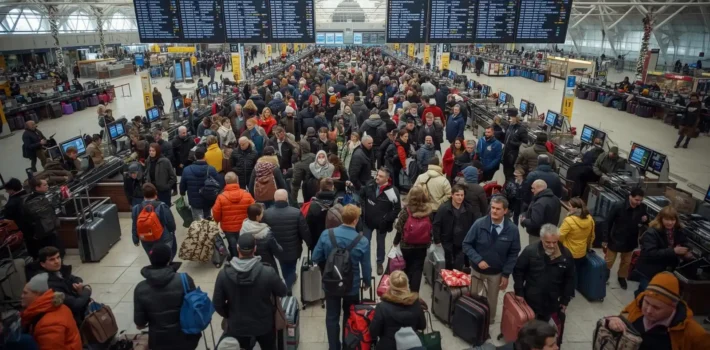
Why Holiday Travel Increases Airport Congestion
Holiday travel periods create a sharp increase in passenger volume across major airports, which directly impacts both airport operations and transportation timing. During peak travel weeks, millions of travelers move through airports within a short time window, leading to longer security lines, heavier road traffic, and more congestion at terminal entrances.
This surge affects every stage of the travel process. High demand increases wait times at check in counters, slows movement through TSA screening, and creates congestion on highways leading to the airport. As a result, even routine airport trips become less predictable.
Key holiday travel impacts
- Passenger volume increases significantly during major holidays
- Airport security and check in lines become longer
- Road traffic to airports becomes heavier and less predictable
- Transportation timing requires additional buffer planning
Understanding these patterns helps travelers plan more effectively and reduce the risk of delays during busy travel seasons.
Major Holidays That Impact Airport Travel the Most
Certain times of the year consistently produce the highest levels of airport traffic across the United States. These periods bring a combination of domestic and international travel demand, which places pressure on both airport infrastructure and surrounding transportation systems.
The Thanksgiving travel week is widely considered one of the busiest times for air travel. Millions of travelers fly within a short span of days, creating high passenger density at airports across the country.
The Christmas and New Year period also generates significant travel volume. This holiday window includes both domestic travel and international trips, increasing demand at major airports such as Newark and JFK.
Spring break periods vary by region but often lead to increased airport traffic as families and students travel to vacation destinations.
Additionally, long weekends such as Memorial Day and Labor Day mark the beginning and end of peak travel seasons, bringing increased passenger volume and heavier highway traffic.
These holiday periods consistently produce higher demand for airport transportation and require more careful planning.
Holiday Passenger Volume at Newark Airport
Newark Liberty International Airport handles a substantial number of passengers throughout the year, serving as a major hub for both domestic and international travel. During holiday periods, passenger volume increases significantly as travelers move between cities for family visits, vacations, and business travel.
The airport processes tens of millions of passengers annually, and this number rises during peak travel weeks. Increased passenger activity affects multiple areas of the airport, including check in counters, security checkpoints, baggage claim areas, and terminal roadways.
Higher passenger volume also impacts the roads leading to the airport. Vehicles dropping off and picking up travelers contribute to congestion near terminal entrances, particularly during early morning and evening travel windows.
According to the Port Authority of New York and New Jersey, Newark remains one of the busiest airports in the region, and its infrastructure must accommodate large spikes in demand during holiday seasons.
Because Newark is located within New Jersey, travelers from Monmouth and Ocean County often experience shorter travel distances. However, increased passenger volume still creates noticeable delays during peak periods.
Holiday Passenger Volume at JFK Airport
John F. Kennedy International Airport experiences even greater variability during holiday travel due to its role as a major international gateway. In addition to domestic travel, JFK handles a large number of long haul international flights, which increases passenger density during global holiday periods.
During holidays such as Christmas and New Year, international travel demand rises significantly. Passengers traveling to and from overseas destinations contribute to higher traffic within terminals, longer processing times at check in counters, and extended security screening queues.
JFK’s multi terminal layout adds another layer of complexity. Each terminal operates independently, and increased passenger volume at one terminal can affect curbside traffic and pickup areas in that specific location.
Because JFK serves both domestic and international travelers at a large scale, holiday congestion often extends beyond the terminal interior and into surrounding roadways, including highways leading into New York City.
Newark vs JFK Travel Conditions During Holiday Rush
Travel conditions during holiday periods differ between Newark and JFK, particularly for travelers coming from central and coastal New Jersey.
Newark Airport generally offers a shorter and more direct route for travelers in Monmouth and Ocean County. The journey primarily involves highways within New Jersey, which reduces the number of variables affecting travel time. However, increased holiday traffic still impacts routes such as the Garden State Parkway and New Jersey Turnpike.
JFK Airport, on the other hand, requires travel into New York City, which introduces additional layers of congestion. Drivers must navigate highways, bridges, or tunnels, followed by city traffic near the airport. During holiday periods, this combination of distance and complexity can significantly increase travel time.
| Factor | Newark Airport (EWR) | JFK Airport |
| Distance from NJ Shore | Shorter | Longer |
| Route Complexity | Moderate | High |
| Traffic Layers | NJ highways only | NJ + NYC traffic |
| Holiday Variability | Moderate to high | High |
While Newark may be more convenient for many travelers, JFK remains essential for certain international routes. Choosing between the two often depends on flight availability and personal travel priorities.
Why Airport Transportation Buffers Matter During Holidays
Travel buffers become even more important during holiday periods because every stage of the airport journey takes longer. Increased passenger volume affects check in counters, security lines, and boarding processes, all of which contribute to extended wait times.
Security screening often experiences longer lines as more travelers pass through checkpoints. TSA processing times may increase during peak hours, especially when multiple flights depart within a short window.
Traffic delays also become more common. High vehicle volume on highways and airport access roads slows travel, particularly near terminal entrances where vehicles queue for drop off and pickup.
Demand for ground transportation increases as well. More travelers rely on taxis, rideshare services, and private transportation during holidays, which can affect availability and timing.
Because of these factors, travelers benefit from adding extra buffer time beyond standard airline recommendations.
Tips for Planning Airport Transportation During Holiday Travel
Planning ahead is one of the most effective ways to manage airport travel during busy holiday periods. Small adjustments can significantly reduce the impact of delays.
Travelers should consider scheduling transportation earlier than usual to account for heavier traffic. Monitoring airline departure times and checking for schedule updates can also help avoid unexpected changes.
Adding extra time for security screening is another important step. Even if travelers typically move through security quickly, holiday conditions often require additional patience.
Avoiding peak traffic hours when possible can also improve travel time. Leaving earlier in the day or outside of major travel windows may reduce exposure to congestion.
By preparing in advance and allowing extra time, travelers can navigate holiday travel more smoothly.
Why Professional Airport Transportation Helps During Busy Travel Periods
Professional airport transportation services can provide additional reliability during high demand travel periods. Pre scheduled transportation allows travelers to plan their departure time in advance rather than relying on last minute arrangements.
Drivers familiar with airport routes often monitor traffic conditions and adjust travel plans accordingly. This helps reduce the impact of congestion and ensures passengers reach the airport within the planned timeframe.
Flight monitoring also plays a role. Transportation providers may track flight schedules and adjust pickup or drop off timing based on changes in departure or arrival times.
Travelers often use services such as Airport Limousine Service when planning airport trips during busy travel periods. Residents across central New Jersey may also coordinate transportation through providers offering Monmouth County limousine service for more consistent travel planning.
For additional route specific planning guidance, travelers can review Monmouth County to JFK Airport Route Toll and Traffic Planning Guide, which explains travel timing and route considerations in more detail.
By combining early planning, realistic timing expectations, and reliable transportation arrangements, travelers can better manage airport trips during peak holiday seasons.