
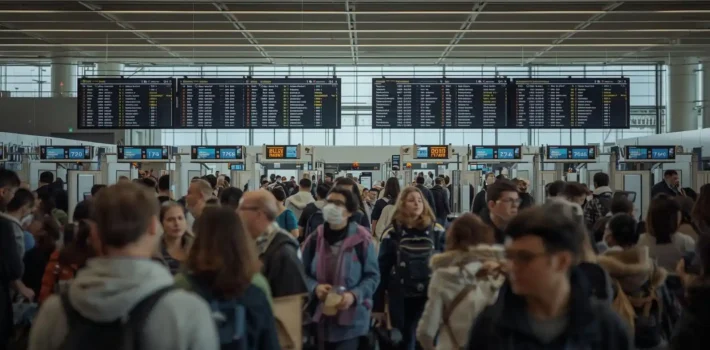
Quick Answer: How Early Should You Arrive at the Airport?
Airlines generally recommend arriving at the airport well before your scheduled departure time to allow enough time for check in, security screening, and reaching the departure gate. While exact recommendations may vary slightly by airline and airport, the travel industry follows a widely accepted guideline.
General airport arrival guidance
- Domestic flights: arrive about 2 hours before departure
- International flights: arrive about 3 hours before departure
- Holiday periods or peak travel days may require additional buffer time
These recommendations help travelers account for airport procedures such as baggage drop, security screening, and terminal navigation. Larger airports or busy travel periods may increase the amount of time needed before boarding begins.
More official guidance about airport timing can be found through the Transportation Security Administration and its travel tips page.
Why Airlines Recommend Arriving Early
Airlines suggest arriving early because several steps must be completed before passengers board their flight. Each of these stages takes time, and delays in any one part of the process can affect whether a traveler reaches the gate before boarding begins.
The first step typically involves check in and baggage drop. Passengers who check luggage must visit the airline counter or automated kiosk before proceeding through security screening. During busy travel periods, lines at baggage counters can become longer, particularly at large airports handling many departures at the same time.
After check in, travelers must pass through security screening. This process involves identity verification, baggage scanning, and passenger screening procedures. Because security lines can vary widely depending on passenger volume, airlines build extra time into their arrival recommendations.
Even after security screening, passengers may still need to walk to their departure gate. Larger airports often have terminals with long concourses or multiple gate areas, which means travelers may need additional time to reach the correct boarding location.
Finally, airlines begin boarding preparation before the scheduled departure time. Boarding typically starts 30 to 45 minutes before departure for domestic flights and even earlier for international flights. Arriving early helps ensure passengers are present when boarding begins.
TSA Security Screening and Wait Time Variables
Security screening conducted by the Transportation Security Administration plays a major role in determining how early travelers should arrive at the airport. While the screening process itself usually takes only a few minutes per passenger, wait times before reaching the checkpoint can vary significantly.
Several factors influence how long security lines may be at any given time. One of the biggest variables is time of day. Early morning departures often create long security lines because many flights leave during similar time windows.
Passenger volume is another important factor. Airports that serve large metropolitan regions frequently handle thousands of travelers per hour during peak periods. As passenger numbers increase, security wait times may also grow.
Holiday travel seasons can also affect screening times. During busy travel periods such as Thanksgiving, winter holidays, and major summer travel weekends, security checkpoints may experience unusually high passenger volumes.
Airport layout also matters. Some terminals have multiple security checkpoints while others rely on a single screening location. This design can influence how quickly travelers move through the checkpoint area.
Because these variables change throughout the day, travelers benefit from planning extra time before reaching the airport.
Airport Size and Terminal Layout Impact Arrival Timing
Different airports operate with very different terminal layouts, which can influence how much time travelers need to reach their departure gate. Larger airports often include multiple terminals, long concourses, or inter terminal transportation systems.
For example, Newark Liberty International Airport operates through several terminals that handle different airlines and flight routes. Travelers may need time to navigate between parking areas, check in counters, and gate locations depending on their airline and terminal assignment.
At John F. Kennedy International Airport, the layout becomes even more complex. JFK operates with multiple independent terminals spread across a large airport complex. Passengers must travel to the correct terminal before beginning the check in and security process.
LaGuardia Airport recently underwent a major redevelopment project that introduced new terminal buildings and redesigned passenger circulation areas. While the updated layout improves navigation, travelers still benefit from allowing extra time to move through the airport during busy periods.
Because terminal layouts vary widely between airports, airline arrival recommendations aim to provide enough buffer time for passengers to navigate these different environments comfortably.
Transportation Time Is Part of the Arrival Buffer
Many travelers focus only on airport procedures when calculating their arrival time, but transportation to the airport is just as important. Delays on the way to the airport are one of the most common reasons passengers arrive late for flights.
Several factors can influence travel time to major airports. Highway congestion during peak travel hours can extend drive times significantly. Toll roads, bridge crossings, and construction zones may also slow traffic unexpectedly.
Weather conditions sometimes affect transportation timing as well. Heavy rain, snow, or reduced visibility can slow highway speeds and increase travel time.
Airport entrance roads may also experience congestion during busy departure periods. Vehicles dropping off passengers often create slow moving traffic near terminal entrances, especially during early morning or late afternoon travel windows.
Because of these variables, travelers usually include additional transportation buffer time when planning their airport departure schedule.
Travel Planning Example: Building a Safe Departure Timeline
One effective way to avoid missing a flight is to build a structured travel timeline that accounts for each stage of the journey. Instead of focusing only on the departure time, travelers can work backward from the flight schedule to determine when they should leave home.
A typical planning process might look like this:
- Choose the airport arrival target
Determine the recommended arrival time based on airline guidelines. For example, two hours before a domestic flight. - Add airline check in time
If baggage must be checked, allow time for airline counters or kiosks. - Add TSA screening buffer
Include time for possible security lines. - Add transportation travel time
Estimate how long it takes to reach the airport under normal traffic conditions. - Add traffic variability buffer
Include extra time for potential delays such as congestion or road construction.
This step by step approach creates a realistic timeline that reduces the risk of unexpected delays affecting the trip.
How Professional Airport Transportation Helps Maintain Timing
Professional airport transportation services often help travelers maintain reliable departure timing because these services plan routes and schedules in advance. Drivers who regularly travel to major airports monitor traffic conditions and adjust routes when necessary.
Pre scheduled transportation also removes the uncertainty of last minute travel arrangements. Instead of searching for transportation shortly before departure, passengers already have a confirmed pickup time and route plan.
Another advantage is flight tracking. Many airport transportation providers monitor flight schedules so they can adjust pickup timing if necessary. If traffic conditions change or flights experience schedule updates, drivers can adapt accordingly.
Travelers planning airport transfers sometimes use services such as Airport Car and Limousine Service to simplify transportation planning and reduce uncertainty on departure day.
Passengers traveling from communities in central New Jersey often coordinate these services through providers offering Monmouth County limousine service, which helps ensure consistent transportation to regional airports.
Simple Travel Planning Checklist for Airport Departures
Before leaving for the airport, travelers often benefit from reviewing a simple checklist that ensures all important planning steps are complete.
- Confirm airline check in requirements
- Review recommended airport arrival time
- Check TSA travel guidance
- Plan the transportation route to the airport
- Add buffer time for traffic variability
- Schedule transportation in advance if needed
Travelers heading to Newark Airport from nearby communities can also review travel timing guidance in the related article Travel Time from Freehold to Newark Airport by Time of Day, which explains typical driving conditions and planning considerations.
By combining airline arrival recommendations, TSA screening expectations, and transportation planning, travelers can create a more reliable schedule for reaching the airport comfortably before their flight.